
VA Insight | Catalyse Public Behavior Change: Using Nudge
Many organisations have been doing public advocacy for years, with various programs and settings, however, the results are not as ideal as they expect. These programs focus on awareness raising, which is easier to realise through education. However, the most difficult part of public advocacy is the inconsistency of awareness and action, namely, people can tell what is right but sometimes do not act in that way. The root cause of it is our thinking and decision-making pattern which does not always remain conscious and rational.
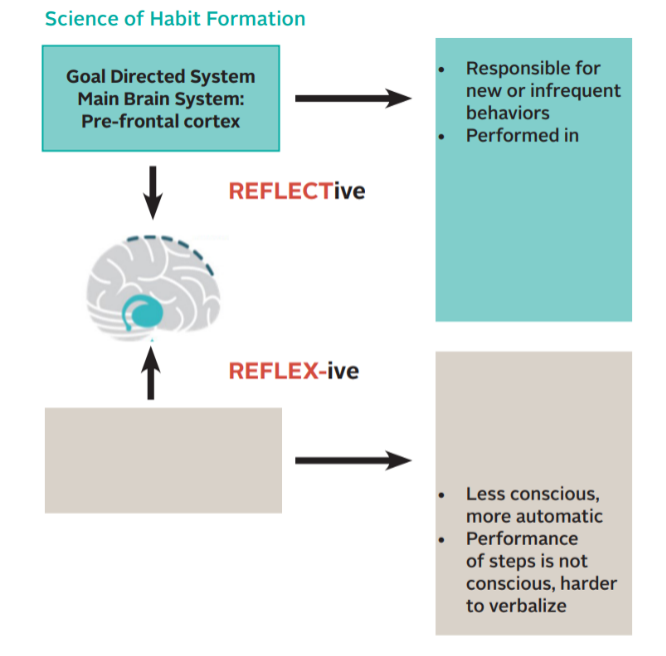
Research shows that about 45 percent of human behavior can be considered habitual – actions that are repeated daily or almost daily in the same physical setting and with little or no conscious thought. The other half of our behaviors are goal-directed, actions we do in a deliberative way. Goal-directed behaviors are managed by a different part of the brain than habitual behaviors.
In order to break the dilemma of the inconsistency between awareness and action, and design effective public advocacy programs for NGOs. Two useful approaches, Nudge Theory and Supportive Environment Framing, will be introduced. This article will focus on the Nudge Theory first.
Nudge Theory
Nudge Theory was put forward by Richard H. Thaler, the winner of the 2017 Nobel Prize in Economics, and Cass R. Sunstein from the Law School of Harvard University in 2008. They think the behavior is not only based on conscious thoughts and decisions, but can be unconsciously guided by choice architecture. Choice architecture is the practice of changing the way that options are presented to people, with the intention of influencing their choices. Nudges influence us to behave in certain ways and perform a behavior without making a conscious decision to do so. The theory can be applied to many fields and the results are sometimes surprising.
Nudge and Public Health
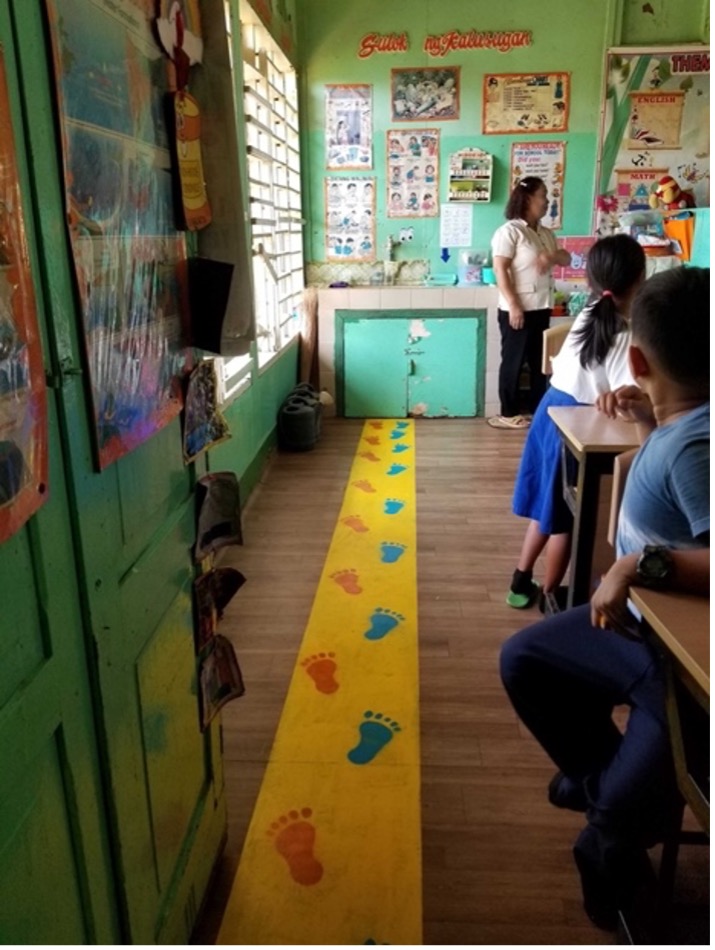
In the field of public health, the theory has been applied to some projects. For example, in a 2015 study, researchers tested the idea of using nudges in school settings to improve rates of handwashing with soap after using the toilet. In two schools, handwashing stations were built in visible and easy-to-reach locations, brightly colored paths were painted from toilets to the handwashing station, and footprints and handprints were painted on the path and handwashing station. Handwashing with soap after using the toilet went from 4% before these nudges were created, to 74% six weeks after nudges were introduced.
Nudge and Environmental Protection
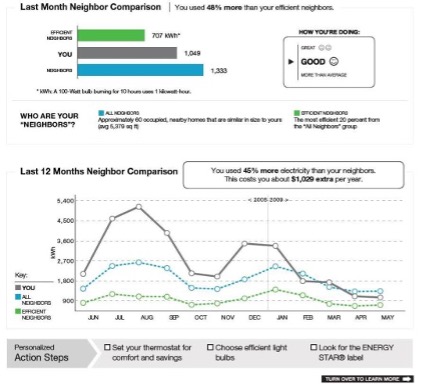
For the transition to public green lifestyles, the theory can also be valid. The practice of an American power company, Opower, is a great example. Each month, Opower sends electricity usage reports to its users. The report consists of two parts, one part of it is advice for household energy saving based on the current electricity consumption model. The other part is the comparison of electricity consumption between the family and nearby 100 families with similar size of homes. The result shows that the electricity consumption of families who receive the report reduces by 1.9%-2%. The reason behind it is that people normally tend to obey social norms and adjust their behavior according to others.
Nudge and Fundraising
If we test the theory in the field of fundraising of NGOs, probably the behavior of individual giving will change. First, increasing the default minimum amount of donation is a way to increase donors’ giving amount. Apart from this, increasing the gap of amount between first class and third class can also induce givers to choose lower classes to achieve a better result. For example, when comparing with $1000, $100 and $200 will be more acceptable, people would tend to make a decision between $100 and $200.
——
Nudge sounds simple and effective, but undeniably, some problems may occur when applying nudges to behavior change. First, nudges will be very effective initially, because people will pay more attention to them out of curiosity. However, as time goes by, it is in doubt that nudges will be continuously effective due to slighter incentives. In addition, to what extent can nudging play a role in habit formation? And will it be still valid after the withdrawal of nudges? These two questions are waiting for more evidence to answer.